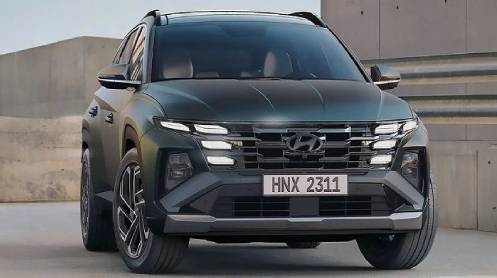
KARACHI: A proposed increase in General Sales Tax (GST) on locally assembled hybrid electric vehicles (HEVs) and plug-in hybrid electric vehicles (PHEVs) has sparked concern among automobile manufacturers, who fear it could disrupt market dynamics and slow the shift towards cleaner mobility.
The proposal suggests raising GST to 18 per cent from the current 8.5 per cent starting July 1, coinciding with the expiry of the existing auto policy on June 30, 2026. Industry stakeholders say they had expected the current concessional rate to remain in place until the policy’s conclusion.
Automakers warn that the proposed tax hike could significantly impact vehicle pricing and demand patterns. “In Pakistan’s auto market, relative price positioning is crucial. If hybrids lose their cost advantage, demand could shift back towards conventional vehicles,” said an industry assembler.
They cautioned that any abrupt changes in tax incentives could affect both consumer behavior and future investment decisions. A narrowing price gap between traditional fuel vehicles and hybrids may discourage buyers from opting for environmentally friendly alternatives, while policy uncertainty could also slow the adoption of electric vehicles (EVs).
Industry experts emphasise that tax policy has historically been a key driver of growth in Pakistan’s automotive sector. “The auto industry has evolved through strategic policy support. When tax structures change, the entire market direction shifts,” said a senior executive at a leading automobile company.
Stakeholders also expressed concern that frequent policy reversals risk undermining investor confidence. “Investments made under incentive-driven policies, along with associated employment opportunities, are put at risk when those incentives are withdrawn prematurely,” an official noted.
The sector’s growth trajectory has been closely linked to past policy frameworks. The Automotive Development Policy (ADP) 2016–2021 successfully attracted new investment, reduced the dominance of established players, and offered reduced duties on imported and locally manufactured auto parts. It also provided new entrants with a five-year tariff protection window.
As a result, around 15 new players — primarily from China and South Korea — committed over $1.1 billion in investments, with more than $1 billion realised through the establishment of assembly plants, dealership networks, and vendor ecosystems. Passenger car sales rose from 181,000 units in FY2016 to a peak of nearly 234,000 units in FY2022.
The subsequent Automotive Industry Development and Export Policy 2021–2026 shifted focus towards exports, technological advancement, and sustainability. Under this policy, duties on hybrid-specific parts were reduced to 4 per cent, plug-in hybrid parts to 3 per cent, and EV components to just 1 per cent, while GST on HEVs and PHEVs remained at 8.5 per cent — a differential that has played a key role in encouraging hybrid adoption.
Industry stakeholders now urge the government to maintain policy consistency to sustain momentum in the transition towards cleaner and more efficient transportation.
Story by Aamir Shafaat Khan